
Foundation Repair services in Houston
Water arrives in a small number of ways and leaves in a smaller number still. The pages below are grouped by which of those a job actually addresses, because the wrong category is the usual reason a foundation repair job gets done twice.
Three questions sort almost every inquiry. Is the water on the surface or in the soil? Does it arrive from above the building or from below it? Is there anywhere lower to send it? Answer those and the right page is usually obvious — and so is the wrong one.
There are cracks in the walls or the slab
Foundation and Wall Crack Repair in Houston, TX
Cracks are repaired once movement has stopped. Sealing one that is still opening buys a season and removes the only thing telling you how fast the house is moving.
The floors slope, or the doors have stopped closing
House Leveling and Foundation Piers in Houston, TX
Leveling a house means installing support below the soil that is moving, then raising the structure back toward its original elevation as far as it will safely go.
Pier and Beam Repair in Houston, TX
Pier and beam houses are leveled by adjusting the supports under the floor framing, which is far cheaper than slab work when the piers themselves are sound.
The floor bounces, or it smells damp under the house
Crawl Space Repair in Houston, TX
Crawl space repair covers three separate jobs — sealing the ground so moisture stops rising, supporting the framing so the floor stops moving, and getting water out and air through. Most houses need one of the three, not all of them.
Concrete outside has dropped or lifted
Concrete Leveling and Slab Lifting in Houston, TX
Concrete leveling raises a sunken slab by filling the void underneath it, either with a cement slurry or with expanding foam, and the concrete itself is reused.
Water stands against the house, or the soil has pulled away from it
Foundation Drainage and Moisture Control in Houston, TX
Clay swells when it takes on water and shrinks when it dries, so the damage comes from the swing between the two rather than from water alone.
Nobody has told me what is actually wrong yet
Foundation Inspection and Elevation Survey in Houston, TX
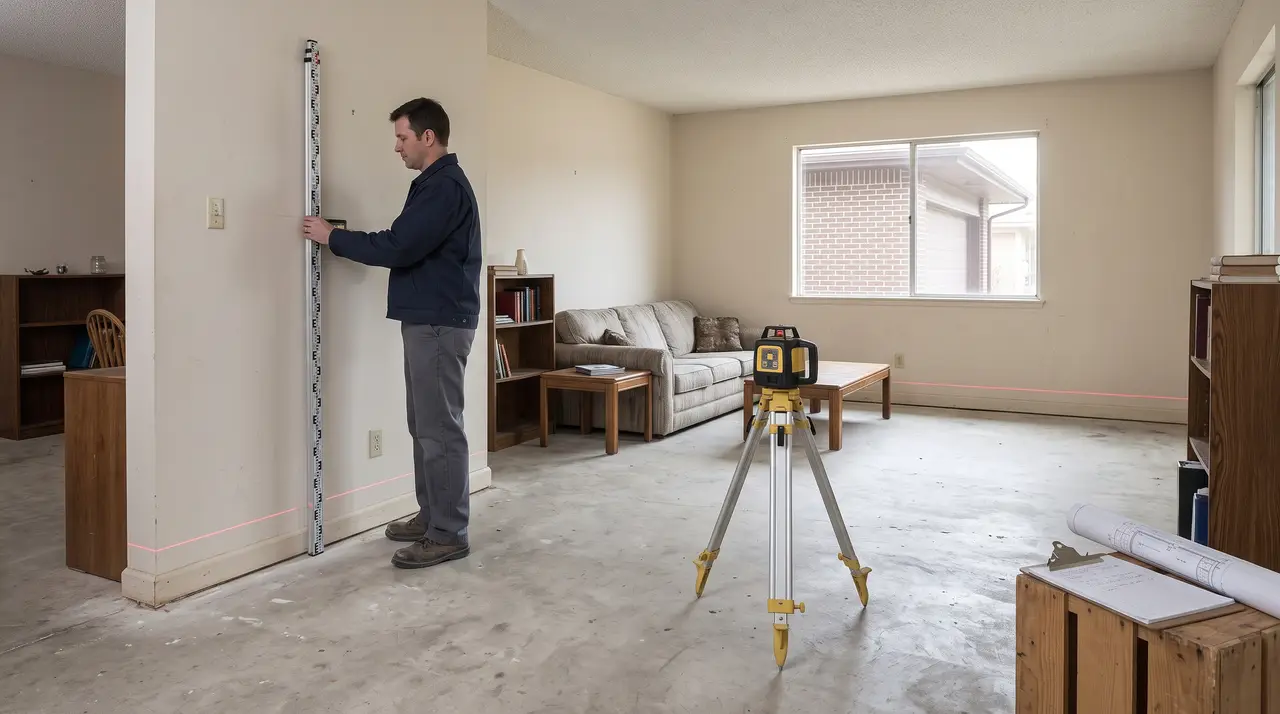
A foundation inspection takes relative floor elevations across the whole structure and writes them down, so the shape and size of the movement is a measurement rather than a description.
It is a business, not a house
Commercial Foundation Repair in Houston, TX
Commercial foundation work is priced from occupancy, phasing and engineered load before it is priced from area, because the building usually has to keep operating.
I have two quotes and do not know which to take
Pressed Piles vs Drilled Piers in Houston, TX
Two ways of reaching support below the active clay. One is driven with the weight of the house, the other bored and poured to a designed depth. It is the decision on nearly every settled slab in clay country, and the two are quoted for the same house at different prices with different timelines.
Mudjacking vs Foam Lifting in Houston, TX
Two ways of raising a sunken concrete slab: a cement slurry pumped underneath, or an expanding polyurethane foam injected through smaller ports. It is the choice on any flatwork that has dropped — a driveway, a patio, a garage floor — and both are offered for the same job at different prices.
When you do not need foundation repair
Two things get mistaken for foundation failure more than anything else. A hairline crack in mortar or brick veneer that has been there for years and has not widened is a finish crack, not a structural one. And a door that binds in late summer and swings free after a wet winter is following the season: clay soil swells when it takes on water and shrinks when it dries, and the house moves a little with it. Neither one is a reason to put piers under a house, and a contractor who quotes on either without measuring first is selling you the wrong job.
Two checks worth making before anyone quotes you.
- Date the crack. Mark both ends with a pencil, write the date on the wall beside it, and measure the width against something known — a dime is about a sixteenth of an inch. Look again in three months. A crack that has not moved is not an active one, and no pier will make it narrower.
- Watch one door through a season change. A door that sticks in the dry months and clears after a long wet spell is tracking the weather, not a failing foundation. A door that has bound a little harder every season for two years is the one worth an inspection, and it is the pattern to describe when you call.
If both checks come back quiet, wait a season and look again before spending anything larger.
Read what a Houston foundation repair job costs before calling anyone, and check the Houston Foundation Repair Co service area to see whether your street is covered.
Back to Houston Foundation Repair Co.
The ground under Houston
Ground that is saturated has nowhere to put the next storm, and water sitting against a wall keeps working on it.
What happens after you send an address
-
The address first, and only then who you are
The first screen asks for the property address and checks that a contractor covers it. Only if one does does it ask for a name, a phone number and an email — there is no point taking your details to tell you nobody serves your street.
-
Your details are not for sale
It goes to a foundation repair contractor working in Houston. The details are never sold, and never passed to a second firm.
-
No cost, and nothing attached
There is no fee for sending an address and no obligation that follows from it. Deciding the work is the wrong work is a perfectly good outcome.
-
Who does the work
An independent foundation repair contractor, not the publisher of this site. Who runs this site, and where every figure on it comes from, is set out on the about page.