Standing water in the yard, or water entering the basement, house, or business?
-
Foundation Inspection and Elevation Survey
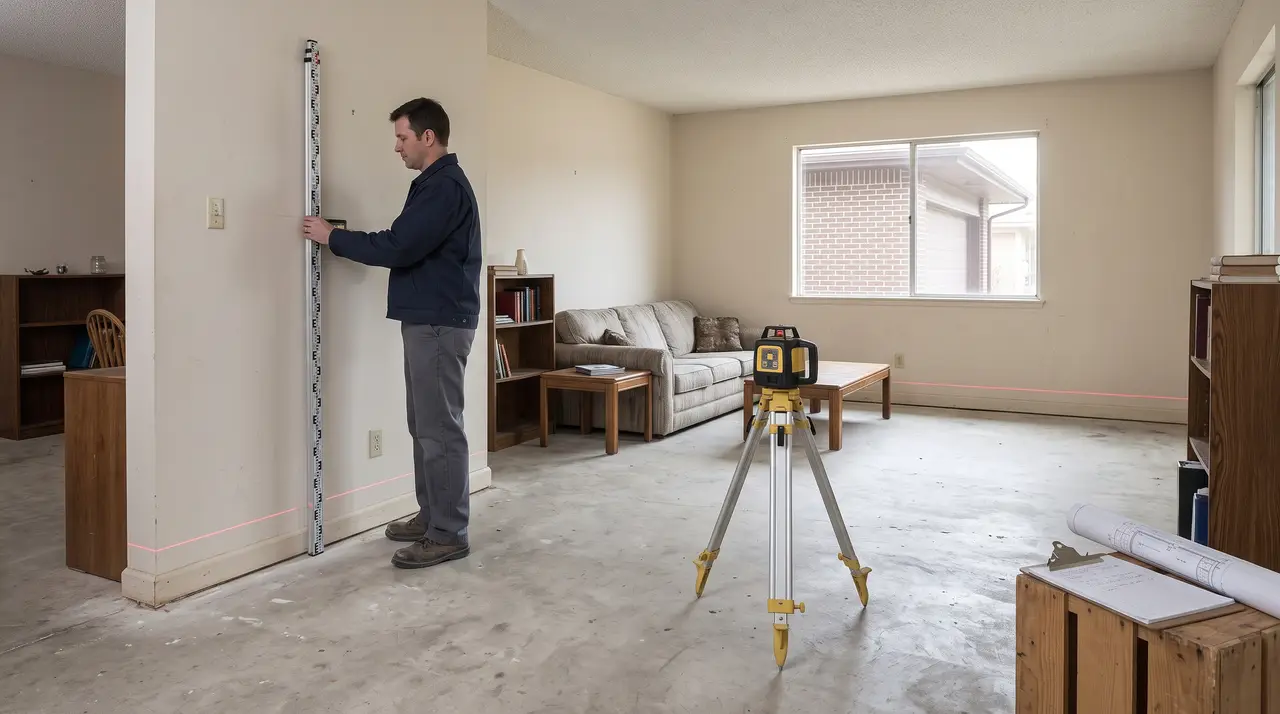
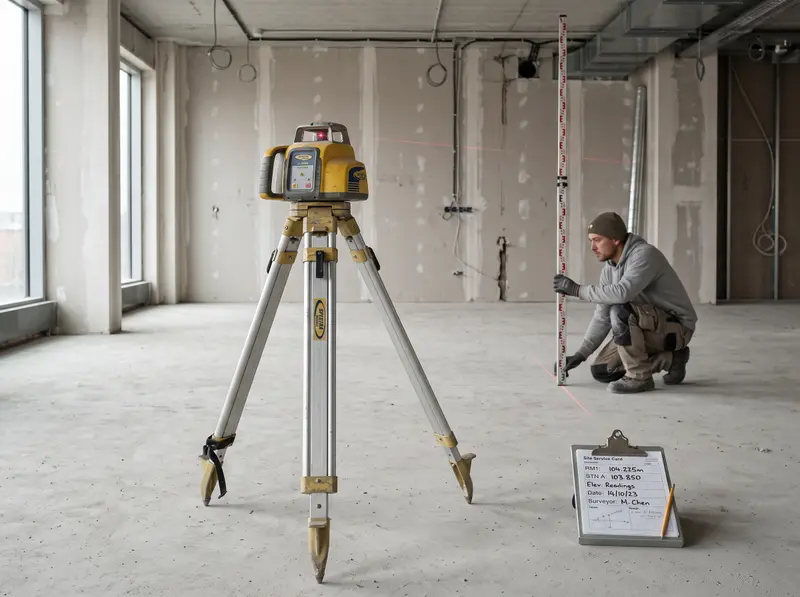
A foundation inspection takes relative floor elevations across the whole structure and writes them down, so the shape and size of the movement is a measurement rather than a description.
-
Foundation and Wall Crack Repair
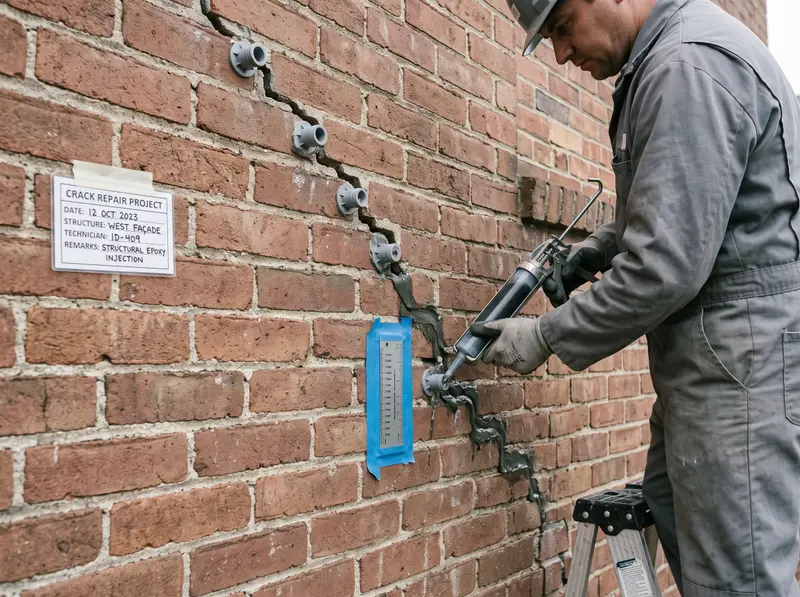
Cracks are repaired once movement has stopped. Sealing one that is still opening buys a season and removes the only thing telling you how fast the house is moving.
-
House Leveling and Foundation Piers
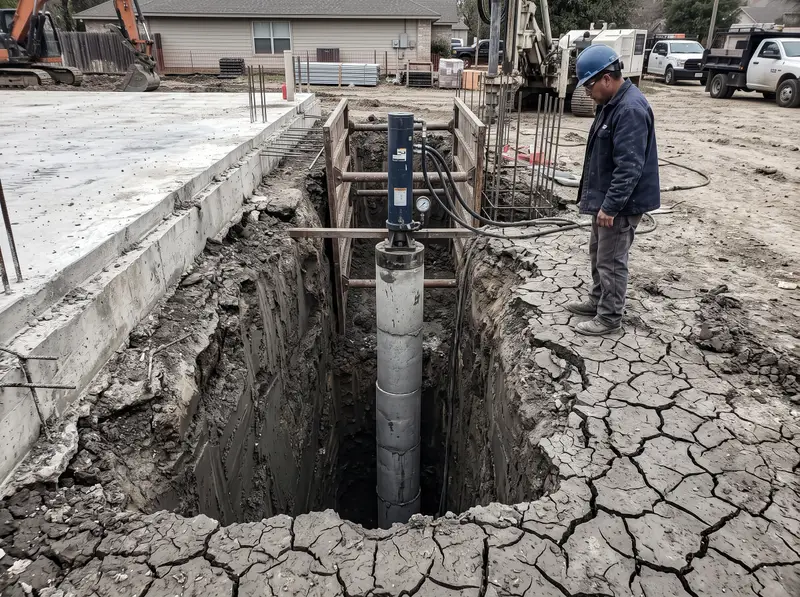
Leveling a house means installing support below the soil that is moving, then raising the structure back toward its original elevation as far as it will safely go.
-
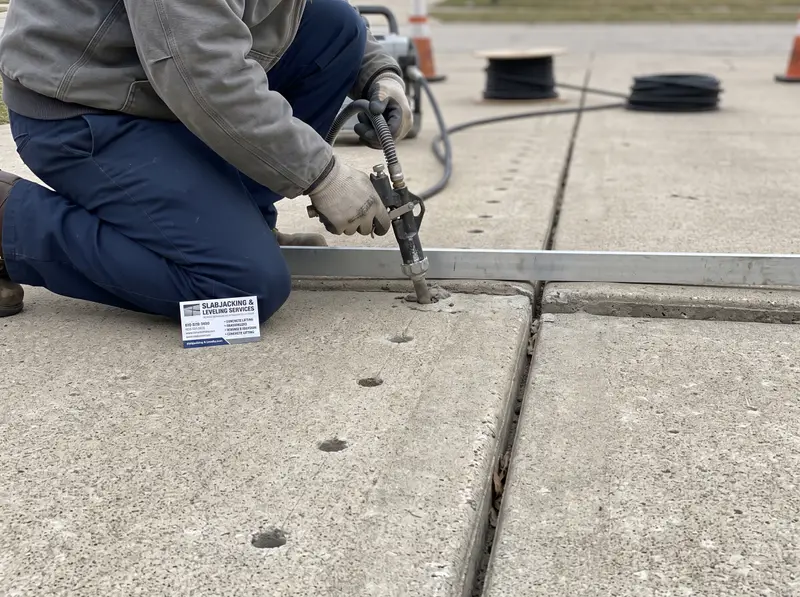
Concrete Leveling and Slab Lifting
Concrete leveling raises a sunken slab by filling the void underneath it, either with a cement slurry or with expanding foam, and the concrete itself is reused.
-
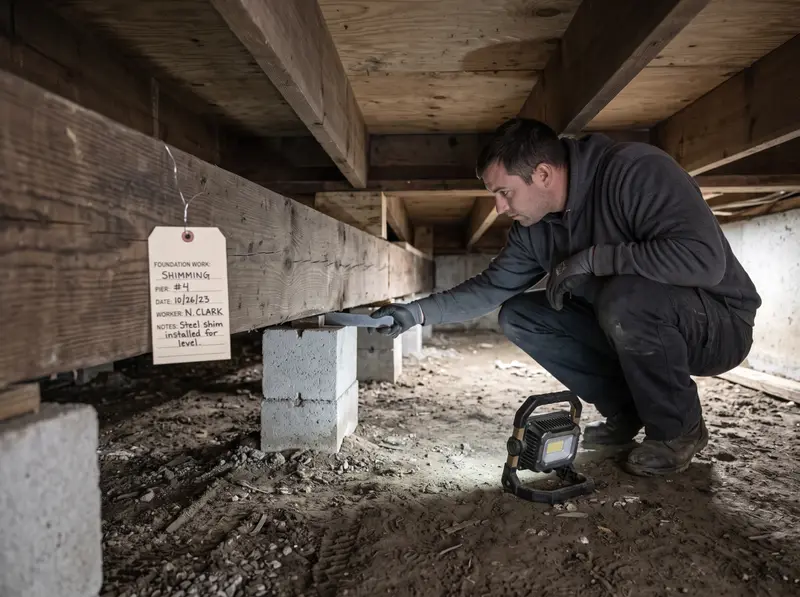
Pier and Beam Repair
Pier and beam houses are leveled by adjusting the supports under the floor framing, which is far cheaper than slab work when the piers themselves are sound.
-
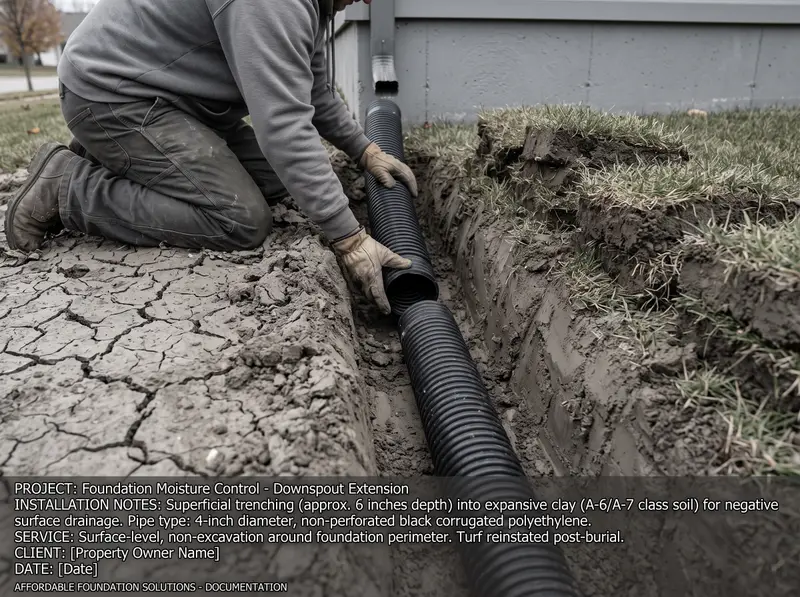
Foundation Drainage and Moisture Control
Clay swells when it takes on water and shrinks when it dries, so the damage comes from the swing between the two rather than from water alone.
-
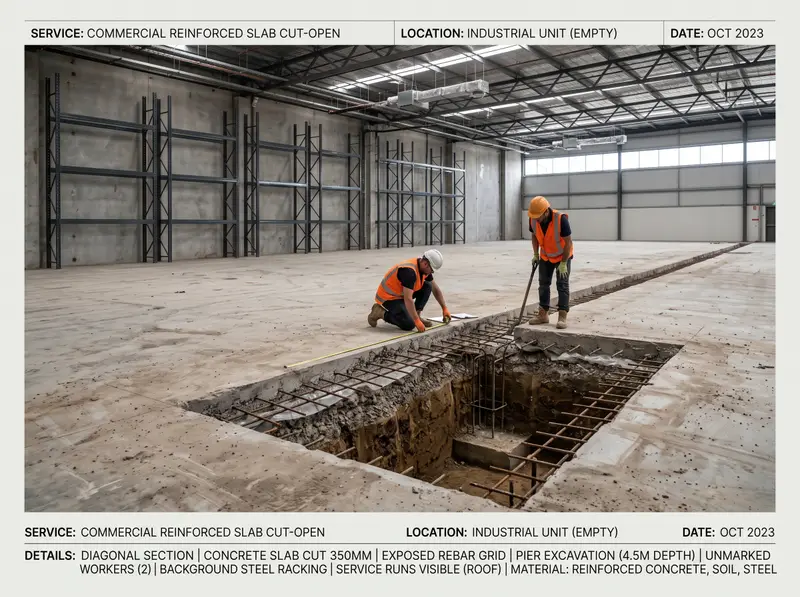
Commercial Foundation Repair
Commercial foundation work is priced from occupancy, phasing and engineered load before it is priced from area, because the building usually has to keep operating.
Where is the water?
- There are cracks in the walls or the slab
- The floors slope, or the doors have stopped closing
- Concrete outside has dropped or lifted
- Water stands against the house, or the soil has pulled away from it
- Nobody has told me what is actually wrong yet
- It is a business, not a house
- I have two quotes and do not know which to take
Trusted across Houston, Texas and Harris County
What this site is good for
-
Residential and commercial
A house with a wet basement and a site with standing water on a hardstanding are different jobs at different scales. Both are covered, and the pages say which is which.
-
Free, and nothing attached
Working out which job you actually have costs nothing and commits you to nothing. There is no fee to you at any point, because this site is paid by the contractor and not by you.
-
Your details are not for sale
An address sent here goes to a foundation repair contractor working in the area. It is never sold, and never passed to a second firm.
-
Permits named, not glossed
The pages name the authority that issues the permit for this work and the inspection that goes with it, so you can ask to see one before the first cut.
-
Every figure sourced and dated
Soil, rainfall and housing figures each name where they came from and when they were retrieved. Where a published estimate carries a margin of error, the margin is shown too.
-
One town, covered properly
This site is about one place and the towns within a short drive of it. It is not a national directory with a city name dropped into a template.
What the ground under Houston does
If Your Houston House Went Up Around 1981, The Water Is Probably Not Coming Through The Wall
The middle home in Houston was built in 1981, so this describes a lot of houses here. Houses of that age sit on poured walls rather than block, and they were graded to shed water when they went up. When water turns up two decades later, something changed after the build. A downspout that ends too close to the wall. A patio poured to the wrong slope. Soil that settled against the footing and now falls the wrong way.
That matters because it points at the cheap fix first. A block wall leaks through the joints and the wall itself has to be treated, which is the expensive version. A poured wall of this age usually fails at the grade instead, and grade work happens outside for a fraction of the cost. Walk the ground within 6 feet of where the water shows up before you price anything.
A contractor who opens with an interior system on a house this age is selling you the expensive version of a different problem. Ask what they found outside first.
Most Houston Yards Sit On Ground That Sheds Water Instead Of Taking It
The USDA has mapped the soil under this city. It sorts soil into four groups by how fast water moves down through it. Group A is sand and it drains. Group D holds water at the surface. Measured against the city limits, 96 percent of Houston is group C or D.
That is the short answer to why yards flood here. Rain does not soak in fast enough. It runs, or it sits.
A further 4 percent of Houston is group A or B — ground that drains on its own. That share matters more than it sounds. On that ground a drain often solves nothing, because the water was already leaving. If your yard clears within a day of a storm, look at your downspouts and your grade before you price a drain.
Soil is mapped by the acre, not by the lot. Your yard can differ from the map under it. Dig a hole a foot deep, fill it with water, and time how long it takes to drop. That test beats any map.
A Houston Drain Is Sized Against A Storm, Not Against A Year
The National Weather Service publishes what a storm drops here, and it is the number a drain is actually built to carry.
In Houston, a two-year storm drops 5.1 inches of rain in a day. That is the storm you get most years. A ten-year storm drops 8.7 inches. A hundred-year storm drops 16.9 inches.
The point is not how much rain falls in a storm like that. It is whether the ground can take it once it does.
So a drain here is not built for a downpour. It is built to move a slow inch off ground that will not absorb it. Ask anyone quoting you a system which storm they sized it for. A shrug is an answer.
What the work actually is
Foundation repair is the business of putting support under a house that has lost it. A pier is driven or drilled down to ground that does not move, the structure above is lifted back toward where it started, and the load is transferred onto the new support. The house is not made new. It is made stable.
Three things decide the price, and none of them is the size of the house. How many support points it needs. How many of those are indoors, because an interior point means opening the floor and closing it again. And how deep each one has to go before it reaches competent ground, which is measured during installation rather than assumed beforehand.
Doors and windows that stick
A door that catches at the top corner, a window that will not close square, or a gap that opens along the top of a frame. These are the frame telling you the opening is no longer rectangular. Before booking anything, get relative floor elevations measured across the whole house — a survey costs a fraction of a repair and is the only thing that says whether the movement is 1 inch or 3, and whether it is still going.
Cracks in brick, drywall or the slab
A stair-step crack through brick mortar, a diagonal crack from a door corner, or a line across a slab. Width is the wrong single test: a hairline crack that is growing matters more than a wider one that has been still for a decade. A dated photograph with a ruler in it, taken a few months apart, costs nothing and answers the only question that decides whether to repair or to watch.
What each of these jobs is
Foundation Inspection and Elevation Survey. A foundation inspection takes relative floor elevations across the whole structure and writes them down, so the shape and size of the movement is a measurement rather than a description. Foundation Inspection and Elevation Survey in Houston, TX.
Foundation and Wall Crack Repair. Cracks are repaired once movement has stopped. Sealing one that is still opening buys a season and removes the only thing telling you how fast the house is moving. Foundation and Wall Crack Repair in Houston, TX.
House Leveling and Foundation Piers. Leveling a house means installing support below the soil that is moving, then raising the structure back toward its original elevation as far as it will safely go. House Leveling and Foundation Piers in Houston, TX.
Concrete Leveling and Slab Lifting. Concrete leveling raises a sunken slab by filling the void underneath it, either with a cement slurry or with expanding foam, and the concrete itself is reused. Concrete Leveling and Slab Lifting in Houston, TX.
Pier and Beam Repair. Pier and beam houses are leveled by adjusting the supports under the floor framing, which is far cheaper than slab work when the piers themselves are sound. Pier and Beam Repair in Houston, TX.
Foundation Drainage and Moisture Control. Clay swells when it takes on water and shrinks when it dries, so the damage comes from the swing between the two rather than from water alone. Foundation Drainage and Moisture Control in Houston, TX.
Commercial Foundation Repair. Commercial foundation work is priced from occupancy, phasing and engineered load before it is priced from area, because the building usually has to keep operating. Commercial Foundation Repair in Houston, TX.
Choosing between two of them
Two questions come up often enough to have their own pages, and both are decided by the site rather than by preference. Pressed Piles vs Drilled Piers in Houston, TX. Mudjacking vs Foam Lifting in Houston, TX.
Not sure which of those it is?
The pages above are sorted by what you can see, not by what a contractor would call it. If none of them is obviously yours, the index lists every job a Houston lot might need and what each one is the answer to. Foundation Repair Services in Houston, TX.
Questions people ask before they call
Most of what decides a foundation repair job is decided by the ground under one particular house, which is why a general answer is only ever half of one. The questions below are answered here twice over: what the general answer is, and what it means on Houston ground. Foundation Repair Questions — Houston, TX.
Read how a Houston Foundation Repair Co estimate works for the six steps from an address to a written quote. See About Houston Foundation Repair Co for the arrangement in full, including what this site is not.
When not to buy one
Water on the floor after a heavy rain, near one wall, with a downspout outside it. Fix the downspout first. Water that seeps through a wall in a wet spring and never in summer. Look at the grade first. A drain installed around either of those is money spent on the wrong cause.
Two checks worth making before anyone quotes you.
- Extend the downspouts. A roof outlet should discharge at least 6 feet from the wall, and 10 is better. One downspout can put hundreds of gallons against a footing in a single storm, and an extension costs a small fraction of a drain.
- Fix the slope. The ground in the first 10 feet should fall away from the house, about 6 inches over that distance. Where it falls toward the house instead, water is being delivered to the wall on purpose.
If either is wrong, correct it and watch one more storm before spending anything larger.
Read what a Houston foundation repair job costs before calling anyone, and check the Houston Foundation Repair Co service area to see whether your street is covered.
Rather talk it through?
(346) 521-5331One call about which foundation repair job you actually have in Houston, before anyone quotes you for one.
Or send your address insteadWhere we cover
14 miles from Houston · no premises, no street address- West University Place5.5 mi
- Bellaire7.1 mi
- Aldine8.8 mi
- Cloverleaf12.7 mi
- South Houston12.9 mi
The ground under Houston
Water sits on the surface instead of soaking in
96% of the city is on soil the USDA rates C or D
Hydrologic soil group is the USDA's summary of how fast water moves down through a soil. A and B drain; C and D shed. This is the share of mapped land area in those groups, measured against the city's Census boundary. Soil is mapped by the acre, not by the lot, so your yard can differ from the map unit under it.
A drain on ground that already drains is money spent on nothing
4% is group A or B — ground that drains on its own
These soils take water down faster than a storm delivers it. On that ground a french drain usually moves water that was already leaving, and the money is better spent on the downspouts and the grade. This is the one figure on this page that argues against buying anything.
In the wettest corners there is nowhere lower for the water to go
The shallowest mapped water table sits 4.7 inches down
A drain works by moving water somewhere lower. Where the seasonal high water table comes within a few inches of the surface, for part of the year there is nothing lower to move it to, and a drain dug into it will simply stand full. This is the shallowest value among the largest soils mapped here, not a typical one.
Questions people actually ask
Are cracks in a Houston house always a foundation problem?
No, and that matters because the cheap answer is common. Drywall cracks from seasonal humidity, settling in the first 2 years of a new build, and framing movement all look similar. What separates them is measurement over time: a crack that is the same width in 6 months is a record, not a problem.
How deep do piers go under a house here?
Deep enough to bear on ground that does not move with the season, which is found during installation rather than promised beforehand. Two houses on the same street can reach it at different depths. Treat any quote that fixes a depth in advance as a quote that has assumed one.
Should I get an engineer or a contractor first?
It depends who asked. If a lender, an insurer or a buyer wants a letter, only a licensed engineer's stamped report closes that file. If nobody has asked and you want to know whether the house is moving, a floor elevation survey is cheaper and gives you a baseline to measure against next year.
When can foundation work be done in Harris County?
Year round. There is no frost window here, and the constraint is moisture rather than temperature: work is harder in the days right after heavy rain, when the ground around the house is saturated. Booking 2 to 4 weeks out is normal outside a drought, when demand spikes.
Who pulls the permit?
The contractor doing the work, in their own name, and the requirement varies by jurisdiction rather than being universal. Ask to see it before the first pier goes in. A contractor who suggests skipping it is telling you something about the rest of the job.
What kind of ground is under Houston?
The largest soil unit mapped here is hydrologic group C/D. The USDA sorts soil into four groups by how fast water moves down through it: A takes water fastest, and D holds it at the surface. Soil is mapped by the acre rather than by the lot, so one yard can differ from the map unit drawn under it.
USDA NRCS Soil Survey Geographic Database (SSURGO), via Soil Data Access — clipped to Harris County, not to Houston — the place's own boundary could not be queried · retrieved 2026-09-17
How old is the typical house in Houston?
The median year built is 1981. A house of that age was graded to shed water when it went up, so water arriving long afterwards usually points at something that changed outside — a downspout ending too close to the wall, a patio poured to the wrong slope, or soil settled against the footing.
US Census Bureau, American Community Survey 5-Year Estimates 2023 · retrieved 2026-09-17
What size of storm is a drain sized against here?
The ten-year, 24-hour design depth is 8.7 inches — the storm a private system is normally sized against, meaning one with a one-in-ten chance of being matched or exceeded in any given year. The National Weather Service publishes it with a confidence range, which is what makes it checkable rather than a rule of thumb.
NOAA Atlas 14 Volume 1 Version 5, Precipitation Frequency Data Server · retrieved 2026-09-17
Ground that is saturated has nowhere to put the next storm, and water sitting against a wall keeps working on it.
What happens after you send an address
-
The address first, and only then who you are
The first screen asks for the property address and checks that a contractor covers it. Only if one does does it ask for a name, a phone number and an email — there is no point taking your details to tell you nobody serves your street.
-
Your details are not for sale
It goes to a foundation repair contractor working in Houston. The details are never sold, and never passed to a second firm.
-
No cost, and nothing attached
There is no fee for sending an address and no obligation that follows from it. Deciding the work is the wrong work is a perfectly good outcome.
-
Who does the work
An independent foundation repair contractor, not the publisher of this site. Who runs this site, and where every figure on it comes from, is set out on the about page.