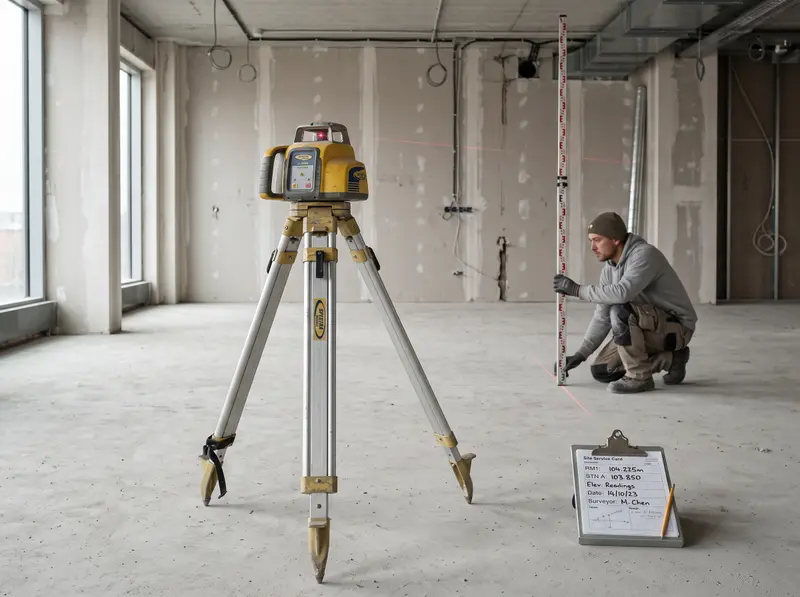
A foundation inspection takes relative floor elevations across the whole structure and writes them down, so the shape and size of the movement is a measurement rather than a description.
Which of these three do you actually need?
Start with what you have to produce and for whom. If nobody has asked you for anything and you simply want to know whether the house is moving, a floor elevation survey is the cheapest thing on this page and the only one that gives you a baseline to measure against next year. If a contract is running and a general home inspection flagged the foundation, you want the pre-purchase version, which is the same measurement written for someone deciding this week and scheduled against your option period. Say the deadline when you book it, because the report is written differently. If a lender, an insurer or a buyer has asked for an engineer’s letter, none of the three is the right purchase. A contractor’s report and a licensed engineer’s letter are different documents and only one of them closes a file. Ask which was requested, in writing, before paying for either.
What an inspection in Houston is measuring against
Up to 51% of the mapped soil under Houston is clay, and the median home here was built in 1981. Those two numbers are why a reading beats an opinion. Clay takes on water and swells, then dries and shrinks, and a house rides the difference every year it stands. A survey turns that into elevations you can compare against next year’s. Without numbers, an old house and a moving house look alike.
The jobs this covers, and what each one costs to get wrong
Foundation Inspection Report
A measured walk of the structure with elevations taken across the floor, written up as a report with the readings in it. It is the right first purchase when nobody has told you what is actually wrong. A reading is a number. An opinion is not.
What moves the price. Square footage and access, mostly. A single-story slab on an open floor plan is one pass. A two-story with a pier-and-beam addition is two systems measured separately. Furniture and flooring that hide the slab edge add time.
When Foundation Inspection Report is the wrong answer. If a lender or a buyer has already named the defect in writing, you may need a structural engineer’s letter rather than a contractor’s report. They are different documents and only one of them closes a file.
Floor Elevation Survey
Relative floor heights recorded at points across the whole structure, plotted so the shape of the movement is visible rather than described. It is what turns “the floor feels off” into a map. It is also the baseline that makes a second survey next year mean something.
What moves the price. The number of readings and whether the structure is one plane or several. Additions, split levels and sunken rooms each need their own reference. Repeat surveys on an existing baseline cost less than the first one.
When Floor Elevation Survey is the wrong answer. If you only want to know whether a single door is out of square, a level and ten minutes answers it. A survey is for the whole structure, and paying for one to check one door is buying the wrong instrument.
Pre-Purchase Foundation Inspection
The same measured survey, run to a closing date, with the findings written for someone who has to make a decision this week. It is the right call when a general home inspection flagged the foundation and the contract clock is already running.
What moves the price. Turnaround more than anything. A survey scheduled inside a few days is priced differently from one booked a fortnight out. Occupied houses with limited access take longer than empty ones.
When Pre-Purchase Foundation Inspection is the wrong answer. If the option period has already closed, this becomes a repair-planning document rather than a negotiating one. Say which you need when you book it, because the report is written differently.
Get an estimate in Houston
None of this can be priced from a description. Three things decide it. What the ground does with water. How much fall the site has. Where the water may go at the end. All three are facts about an address, and none of them show up in a photograph. Send the address and what you are seeing. Someone who does this work in Houston takes it from there. If it turns out to be a cheaper job than the one you came here for, that is worth hearing before anyone digs.
Houston Foundation Repair Co services.
Read what a Houston foundation repair job costs before calling anyone, and check the Houston Foundation Repair Co service area to see whether your street is covered.
Back to Houston Foundation Repair Co.
The ground under Houston
Questions people actually ask
How long does a foundation inspection take?
Most single-story houses are measured in under two hours. Additions, split levels and pier-and-beam sections each need their own reference plane, so a house with several of those takes longer.
What should the report actually contain?
The elevation readings themselves, where each was taken, and the date. A report that describes the house without the numbers in it cannot be compared against a second reading later, which is most of what it is for.
Is a foundation inspection the same as an engineer's report?
No. An engineer is licensed to make a structural determination and to stamp it. A contractor's inspection measures and reports. If someone has asked you for a stamped letter, a contractor's report will not satisfy it.
Should I get one before buying a house?
If the general inspection flagged movement, yes, and schedule it against the option period rather than after. Booking inside a few days is priced differently from booking a fortnight out.
Will an inspection tell me what the repair will cost?
It tells you what has moved and by how much, which is what a price is built from. Any number quoted without that measurement is a guess about a house nobody has measured.
Trusted across Houston, Texas and Harris County
What this site is good for
-
Residential and commercial
A house with a wet basement and a site with standing water on a hardstanding are different jobs at different scales. Both are covered, and the pages say which is which.
-
Free, and nothing attached
Working out which job you actually have costs nothing and commits you to nothing. There is no fee to you at any point, because this site is paid by the contractor and not by you.
-
Your details are not for sale
An address sent here goes to a foundation repair contractor working in the area. It is never sold, and never passed to a second firm.
-
Permits named, not glossed
The pages name the authority that issues the permit for this work and the inspection that goes with it, so you can ask to see one before the first cut.
-
Every figure sourced and dated
Soil, rainfall and housing figures each name where they came from and when they were retrieved. Where a published estimate carries a margin of error, the margin is shown too.
-
One town, covered properly
This site is about one place and the towns within a short drive of it. It is not a national directory with a city name dropped into a template.
-
An open pier cut past the slab edge. How deep it has to go is decided by the ground, not by the house. -
The lift itself, read off a dial indicator. Deciding where to lift is the part that takes the measuring.


Ground that is saturated has nowhere to put the next storm, and water sitting against a wall keeps working on it.
What happens after you send an address
-
The address first, and only then who you are
The first screen asks for the property address and checks that a contractor covers it. Only if one does does it ask for a name, a phone number and an email — there is no point taking your details to tell you nobody serves your street.
-
Your details are not for sale
It goes to a foundation repair contractor working in Houston. The details are never sold, and never passed to a second firm.
-
No cost, and nothing attached
There is no fee for sending an address and no obligation that follows from it. Deciding the work is the wrong work is a perfectly good outcome.
-
Who does the work
An independent foundation repair contractor, not the publisher of this site. Who runs this site, and where every figure on it comes from, is set out on the about page.