Symptoms cluster: doors sticking on one side of the house, diagonal cracks from door and window corners, gaps opening at the skirting, floors that fall away as you cross a room. One symptom alone is weak evidence. Several together, changing over months, is not.
Why Houston houses move at all
Two figures explain most of it. Up to 51% of the mapped ground here is clay, and a ten-year storm drops 8.7 inches in a day. Clay expands as it takes that water up and contracts as it dries out again, so the soil a foundation bears on does not stay the same size through the year. Movement here is ordinary; the question is always whether it has stopped.
The reasoning behind that
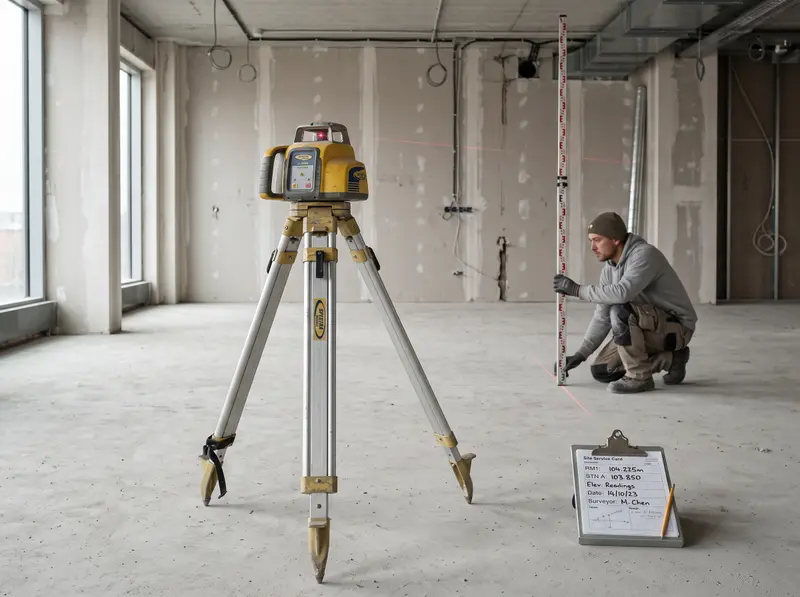
Start by counting rather than measuring. A single sticking door is a door. A single hairline crack in a garage slab is what concrete does as it cures. Four symptoms in the same quarter of the house is a different finding, and it is the pattern rather than any one item that is worth acting on. The test that actually decides is time. Photograph each crack with something for scale in the frame and date it. Look again in three months. A crack that has been the same width for years and one that opened last spring are indistinguishable in a single photograph and want completely different responses. What settles it properly is an elevation survey, which records relative floor heights across the structure. That converts a list of symptoms into a number, and every conversation after it — with a contractor, an engineer, an insurer or a buyer — starts from that number rather than from a description. Nobody can tell you from a photograph. Any firm willing to is quoting on houses like yours rather than on yours.
Every question, in one place: Houston Foundation Repair Co questions.
Check the Houston Foundation Repair Co service area to see whether your street is covered.
Back to Houston Foundation Repair Co.