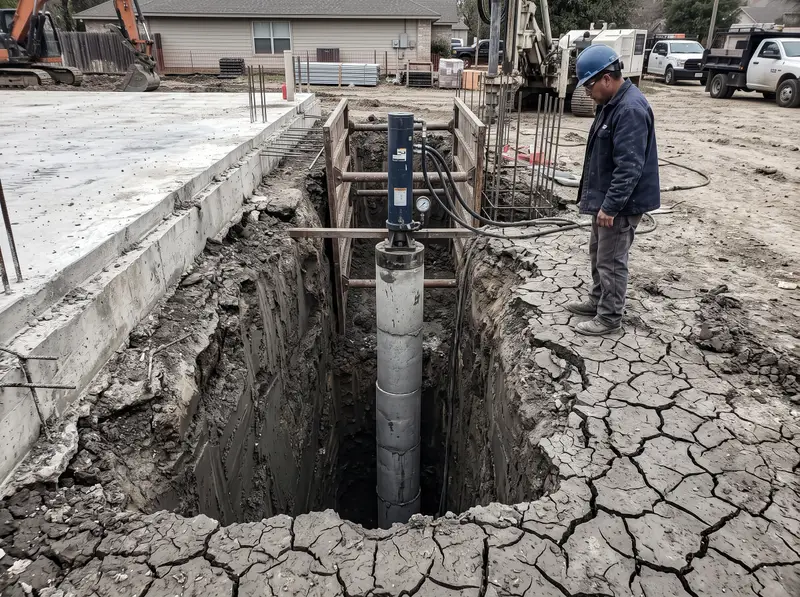
Raising a slab moves everything cast into it, including drain lines that have been sitting in their settled position for years. A plumbing test after the lift is the way that gets caught, and it is worth agreeing to before the work.
The reason a Houston leak test is worth doing first
Two local facts make the pre-test worth its cost here. Up to 51% of the mapped soil is clay, so a slab leak saturates ground that responds by swelling — which means a leak can be the cause of the movement rather than a consequence of the repair. And the median house here dates from 1981, which is old enough that the original drain material is worth establishing before anything is lifted.
The reasoning behind that
Drain lines under a slab have no flexibility to spare. They were installed level, the ground moved, and they have been sitting in the moved position long enough for the joints to accept it. Restoring the slab toward its original elevation asks those joints to move again. Sometimes the pipe was already compromised and the lift reveals it rather than causing it. That distinction matters commercially and it is almost impossible to settle after the fact, which is the argument for a pre-work test as well as a post-work one. A static or hydrostatic test isolates the drain system and holds water in it to see whether the level falls. Run before and after, the pair establishes what changed. Run only afterwards, it establishes a problem with no agreed starting point. Ask for both, in writing, as part of the scope. Any firm that has done this work before will expect the question and many will offer it unprompted.
Every question, in one place: Houston Foundation Repair Co questions.
Check the Houston Foundation Repair Co service area to see whether your street is covered.
Back to Houston Foundation Repair Co.