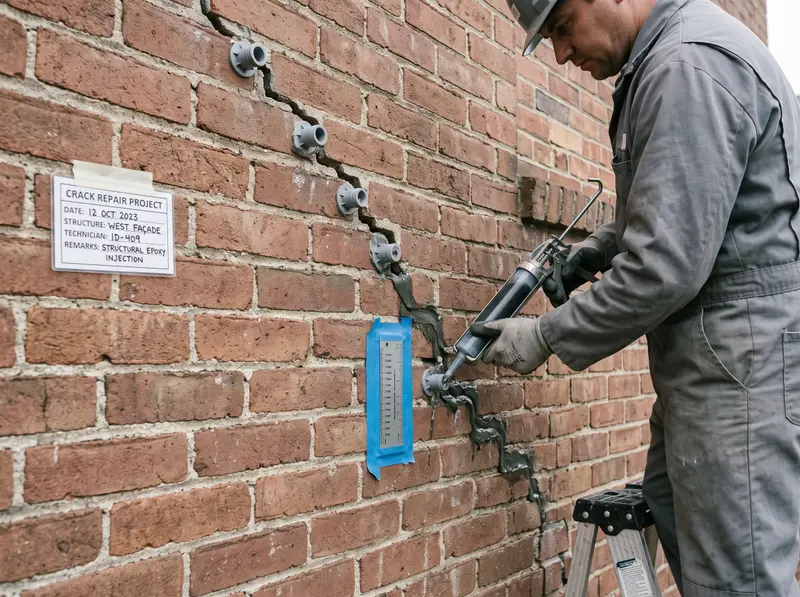
Concrete cracks as it cures and as it takes up load, so most cracks are ordinary. The ones that matter are growing, and a crack that is growing matters more than a wider one that has been still for a decade.
What cracks a Houston house in the first place
The dominant mapped soil unit here is Clodine-Urban land complex, 0 to 1 percent slopes, and the mapped units run to 51% clay. Clay does not stay the same size: it expands as it takes on water and contracts as it dries, and a structure bearing on it rides that difference every year. Cracking is the visible record of the difference, which is why it is common here and why common does not mean meaningless.
The reasoning behind that
Width is the test people reach for and it is the weakest one available. A hairline crack opening steadily is a more serious finding than a wider crack that has not changed in ten years, and the two are indistinguishable in a single photograph. Direction carries more information than width. Diagonal cracks running from the corners of doors and windows are the classic record of one part of a structure sitting at a different height from another. Vertical cracks in the middle of a wall are frequently shrinkage. Horizontal cracking in a wall is a different mechanism again and is the one most worth having looked at. The pattern across the whole house matters most of all. Several symptoms clustered in one quarter of a structure is a finding; the same number scattered evenly is usually the building being a building. This page will not tell you what your crack means. Describing the categories is honest; diagnosing a house nobody has seen is not.
Every question, in one place: Houston Foundation Repair Co questions.
Check the Houston Foundation Repair Co service area to see whether your street is covered.
Back to Houston Foundation Repair Co.